POLYNESIAN MYTHOLOGY
© 2010 - 2026 by MrRinkevich.com
Pantheon: Polynesian
Key Info
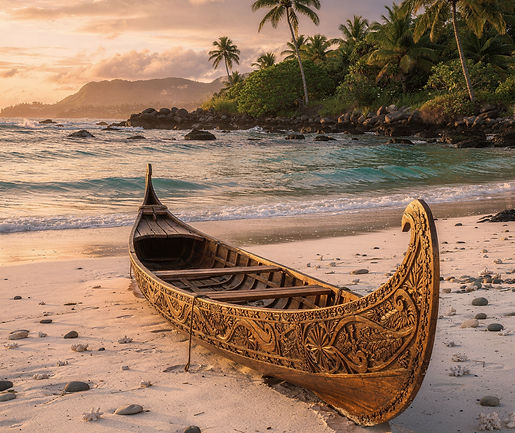
- The canoe is a vital part of Polynesian life, travel, culture and history
Brief Bio
When Captain Cook arrived in Kealakekua Bay in 1779, it is said he was greeted by some 1,500 canoes, a clear indication that the Hawaiian people centered their lives in and on the ocean. There were so many canoes, in fact, that Cook’s men thought they could walk to the shore stepping from canoe to canoe.
According to ancestral tradition, great ceremony was associated with every aspect of the canoe, starting with finding and hewing the perfect tree, a process overseen by a kahuna. The first Hawaiian canoes were crafted of koa wood, a species of hard wood endemic to the Hawaiian Islands and often found deep in the upland forests. After days of prayer and work, the chosen log would be hauled — some weighing thousands of pounds and measuring up to 70 feet in length — to a special shelter by the sea, where it was carved under the kahuna’s watchful eye and plentiful blessings into a sacred vessel that would eventually be launched into the water.
Wa'a