POLYNESIAN MYTHOLOGY
© 2010 - 2026 by MrRinkevich.com
Pantheon: Polynesian
Key Info
- Malevolent ghosts, spirits and demons
Brief Bio
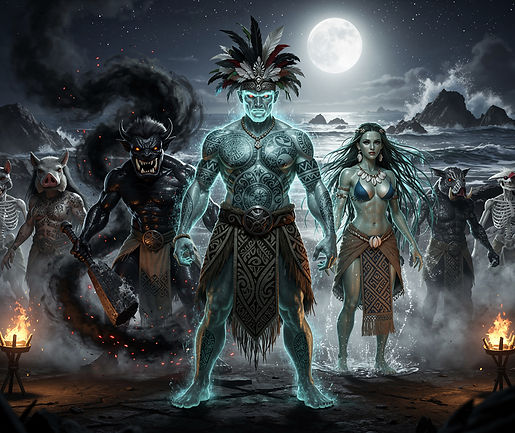
In Polynesian languages the word aitu refers to ghosts or spirits, often malevolent. The word is common to many languages of Western and Eastern Polynesia. In the mythology of Tonga, for example, ʻaitu or ʻeitu are lesser gods, many being patrons of specific villages and families. They often take the form of plants or animals, and are often more cruel than other gods. These trouble-making gods are regarded as having come from Samoa. The Tongan word tangi lauʻaitu means to cry from grief, to lament.
In Māori mythology, the word aitu refers to sickness, calamity, or demons; the related word aituā means misfortune, accident, disaster. In Tahitian, aitu (syn. atua/raitu) can mean 'god' or 'spirit'; in other languages, including Rarotongan, Samoan, Sikaiana, Kapingamarangi, Takuu, Tuamotuan, and Niuean, aitu are ghosts or spirits.
Aitu